Orthodontic Dental Photosensitive Resin – 808
Product Introduction
The 808 series of 3D printing photosensitive resins are specifically designed for the preservation of orthodontic dental models. This material boasts fast molding speed, high precision, and a high surface hardness. Its high detail reproduction and excellent model quality meet the requirements of dental model production. This material’s unique long-term storage (over three years) without discoloration or deformation, with only slight performance degradation, makes it ideal for long-term storage of dental models.
Orthodontic Dental Model Photosensitive Resin Material:
Product Name: 3D Printable Dental Membrane Photosensitive Resin (Orthodontic Dental Model Resin Material)
Model: 808
Color: White/Skin/Brown/Orange (Customizable Colors)
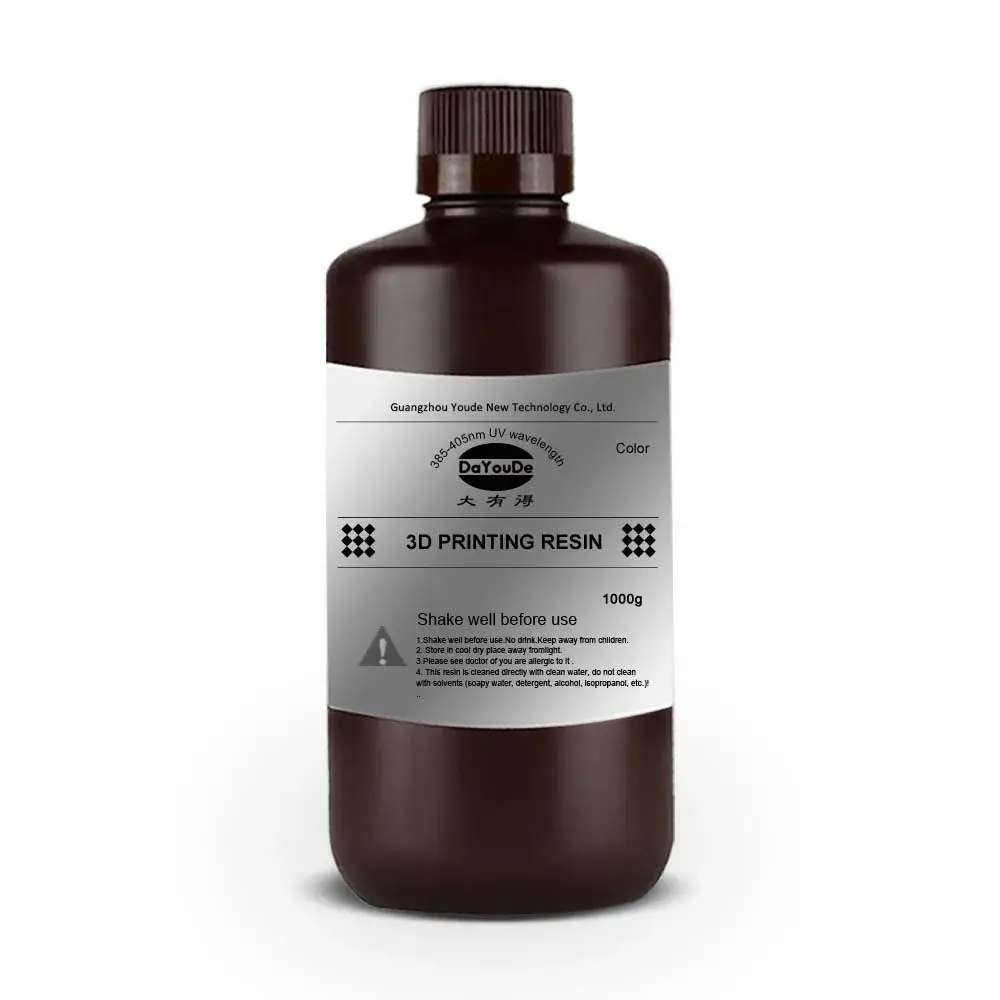
Packaging: 500g/1000g Bottles
Compatible Printers: DLP Reflective Light (High Intensity) / LCD Transmitted Light (Low Intensity)
Compatibility: Desktop Photosensitive Resin LED Light Source, 385nm-405nm Wavelength
Material Features:
01 Low Shrinkage
Designed to minimize volume shrinkage, ensuring dimensional stability of printed models.
02 High Molding Precision
The 808# dental resin features sharp attachments, capturing fine features and providing a tight fit to the film.
03 High-Temperature Resistance
The cured model is autoclavable, with a heat deflection temperature of 130°C, making it convenient for dentists to sterilize and disinfect at high temperatures.
04 High Strength
The cured model has a smooth surface, excellent mechanical strength, and high surface hardness, reaching 90D. It can be tapped, polished, and sculpted without breaking.
05 Easy Removal
Used for hollow or solid 3D printing of complete and partial models, as well as resins with removable models.
06 High Detail
Color allows for easy visualization of dental anatomy and details.
Applications:
Used for printing 3D orthodontic dental models, surgical guides, and trays. Suitable for splints, aligners, crowns, gingiva, bridges, and implant models manufactured using silicone or gel and thermoforming techniques.
Physical Parameters:
Test Item Test Results
Viscosity 280-380 cps @ 25°C
Critical Exposure Energy 6-7.5 mJ/cm²
Tensile Strength 45-54 MPa
Tensile Modulus 1,850 MPa
Elongation at Break 2-6%
Notched Impact Strength 17-20 J/m
Heat Deflection Temperature 130°C
Shore Hardness 90D
Note:
The above values may vary depending on part geometry, print settings, temperature variations, and post-curing. Therefore, users must test the product before use to ensure that it meets their end-use performance requirements.
The above values are typical and are not intended to constitute binding material specifications or guarantees unless expressly agreed to in writing. Final results will depend on the user’s actual use. This table is for reference only.
Application Examples: